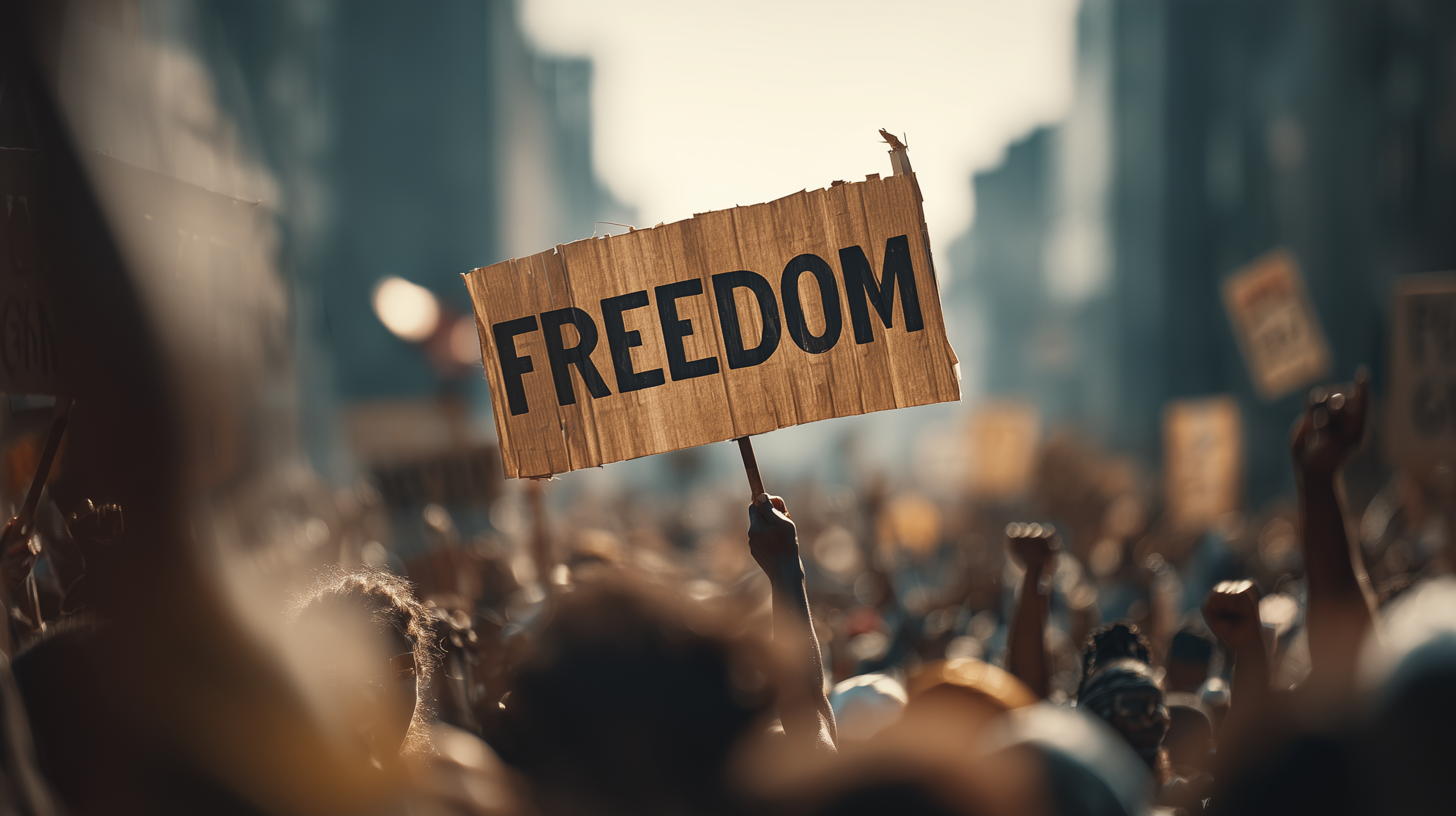
The 21st century has made one political and human tension impossible to ignore: the struggle to balance freedom, security, and control. These three forces are no longer abstract principles discussed only in philosophy, constitutional law, or state theory. They now shape daily life in visible and invisible ways. They determine how people move through cities, how governments justify surveillance, how platforms manage speech, how companies collect data, how borders are enforced, and how ordinary citizens are taught to think about risk, order, and responsibility.
In earlier eras, this conflict often appeared in more familiar forms. Freedom was associated with rights, autonomy, and protection from state interference. Security was linked to defense, public order, and physical safety. Control was often treated as something more suspect, associated with authoritarianism, censorship, or excessive state power. Today, those categories are far less stable. Security is increasingly used to justify systems of control, while control is often presented not as oppression, but as convenience, prevention, efficiency, or responsible governance. At the same time, freedom itself is no longer discussed only in legal terms. It is increasingly shaped by technology, infrastructure, algorithms, and institutional design.
This is why the conflict between freedom, security, and control has become one of the defining struggles of the century. It is not a clash between clearly separate ideas. It is a conflict over how societies are organized, what kinds of risks they are willing to tolerate, and how much human autonomy can survive in environments built around constant monitoring and management.
One reason this conflict feels so central today is that insecurity has become permanent. Modern societies are shaped by overlapping fears: terrorism, cybercrime, disinformation, pandemics, migration crises, financial instability, ecological disruption, and political polarization. In such an atmosphere, security is no longer an occasional state priority activated during emergencies. It becomes a standing logic of governance. Institutions begin operating as if uncertainty itself justifies preemptive intervention. Systems are designed not simply to respond to harm after it occurs, but to predict, prevent, and manage possible harm before it fully appears.
This shift is significant because preventive logic almost always requires more control. It requires more data, more oversight, more verification, more filtering, more automated detection, and more tolerance for background surveillance. People are told that such systems are necessary to keep society safe, efficient, and resilient. In many cases, the argument is persuasive. Citizens do want protection from violence, fraud, abuse, instability, and disorder. The problem is that security measures rarely remain limited to their original purpose. Once systems of control are established, they tend to expand, normalize, and sink into everyday life.
Technology has intensified this pattern. The 21st century is the first era in which control can be built not only through laws and police power, but through platforms, devices, sensors, databases, and predictive systems that operate continuously. A person can be tracked, profiled, ranked, filtered, and influenced without feeling overtly coerced. Control no longer always looks like prohibition. It often looks like design. It appears in frictionless interfaces, identity checks, recommendation systems, automated moderation, risk scoring, workplace monitoring, smart infrastructure, and invisible data collection that turns behavior into something manageable.
This matters because modern control is often soft in appearance but deep in effect. It does not always force obedience through visible punishment. Instead, it shapes the range of available choices, the speed of decisions, the conditions of access, and the standards by which people are judged. A person may still feel free while moving through systems that have already narrowed their options, classified their behavior, and predicted their value. That is one of the most complex features of contemporary power. Freedom can be weakened without being openly revoked.
At the same time, the language of freedom has also changed. Freedom is no longer only about protection from the state. It increasingly involves questions of privacy, data ownership, informational self-determination, freedom from manipulation, freedom from constant evaluation, and freedom to move through digital and institutional life without being endlessly tracked. In this sense, freedom today is not just a political right. It is also a condition of human dignity. It concerns whether people can think, speak, experiment, make mistakes, and develop identities without every action being stored, assessed, and fed back into systems of oversight.
The conflict becomes sharper because societies do not reject control outright. In fact, people often welcome it when it arrives in the form of convenience. Digital navigation, biometric access, fraud detection, personalized systems, content filtering, and predictive services all make life easier in certain ways. Control becomes difficult to resist when it feels useful. The central problem of the century is not that control is imposed only through fear. It is that it is often accepted through comfort. Societies may lose forms of freedom not through direct repression, but through gradual adaptation to environments where convenience and security consistently outweigh autonomy.
This creates a serious democratic challenge. Democracies depend on more than elections and formal rights. They depend on citizens who have meaningful room for dissent, privacy, unpredictability, and independent judgment. When public life becomes too governed by systems of tracking and management, democratic culture can become thinner even if its institutions remain formally intact. People may still be allowed to speak, but do so under conditions of monitoring. They may still be able to participate, but only through infrastructures that sort, reward, and regulate behavior constantly. The question is no longer only whether freedom exists on paper. It is whether it remains livable in practice.
Security, of course, cannot simply be dismissed. A society that ignores safety, violence, exploitation, or disorder in the name of abstract liberty will quickly produce insecurity for the most vulnerable. That is why the conflict is so difficult. Freedom without security can become fragile and unequal. Security without freedom can become suffocating. Control without limits can become self-justifying. The challenge is not to choose one value and eliminate the others. It is to prevent any one of them from becoming absolute.
The 21st century makes this balancing act harder because crises move faster, technologies scale quicker, and institutions increasingly rely on automation. Under pressure, control tends to appear more practical than freedom. It seems measurable, immediate, and administratively useful. Freedom, by contrast, often appears slower, messier, and harder to defend. Yet that is precisely why it requires protection. Freedom includes inefficiency, privacy, ambiguity, and the right not to be fully known by systems of authority. It protects the human space that cannot be reduced to risk management alone.
The deepest question of this century may therefore be simple to state, even if it is difficult to answer: how much control can a society build in the name of safety before it changes the meaning of freedom itself? This is not only a matter for courts, legislators, or technology companies. It is a question that affects urban life, education, labor, speech, identity, and the design of everyday systems. It concerns what kind of humans societies expect people to become: self-governing citizens, permanently monitored subjects, or something uneasily in between.
Freedom, security, and control are not temporary themes of the present era. They form one of its central moral and political battlegrounds. The societies that navigate this conflict wisely will not be the ones that eliminate risk entirely. They will be the ones that protect safety without turning human life into a permanently managed condition.